
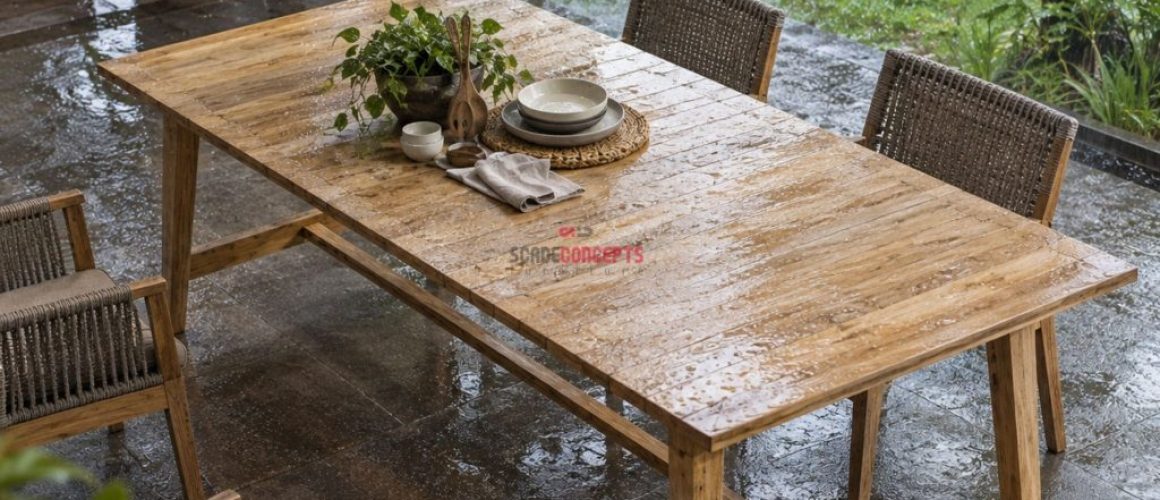
How to Look After Outdoor Teak Furniture in Malaysia’s Rainy Season
If your afternoons have been ending in thunder lately, that’s the inter-monsoon. This phase to run from 9 October to the end of the month, bringing heavy rain, lightning and strong wind in short bursts, mostly in the afternoon and early evening. After that, the Northeast Monsoon usually settles in from November until around March.
Solid teak is about the best thing you can leave outside through all of that. Boat builders have trusted it on decks for centuries. But “teak can handle rain” isn’t quite the same as “teak needs nothing”. When customers bring us problems after a wet season, it’s rarely rot. It’s water trapped where it shouldn’t be, mildew on the surface, soggy cushions, and the occasional parasol that went for a walk in a storm.
Here’s our outdoor teak furniture care routine for the wet months, and what you can safely ignore.
What rain does to teak, and what it doesn’t
Teak is full of natural oils and has a tight, even grain, so water beads up and runs off instead of soaking in. The same oils help it resist rot and insects. (We cover the background in What is Teak Furniture?)
What you will notice is colour. Sun and rain together slowly turn the honey-gold surface silver-grey. That patina is paper-thin, and the wood underneath is as strong as the day it arrived. Plenty of our customers wait for it on purpose.
A few other things are normal too:
- Small dark spots. This is surface mildew living on dust and pollen, not on the wood, and it cleans off.
- A slightly rough feel after heavy rain. The grain lifts when it’s wet and settles again as it dries.
- Hairline cracks on the ends or the top. Solid wood moves through wet and dry spells; these are cosmetic and don’t weaken the piece.
What you shouldn’t see on genuine teak is soft wood, swollen joints or a surface that flakes. If a “teak” set does that in its first rainy season, it may not have been teak to begin with. Our guide on how to tell if wood is really teak explains what to look for.
A 30-minute check before the monsoon
- Tighten every bolt and screw. Wood swells and shrinks with the humidity, and fittings on folding chairs and tables work loose first.
- Check the feet. Legs standing on grass, soil or wherever puddles form will draw water up through the end grain. Move them onto tiles or pavers, or fit rubber feet pads.
- Find the waterfall. Every porch has one spot where the gutter overflows or the downpipe splashes. Don’t park the sofa there.
- Clear the gaps. Leaves and soil packed between slats hold water against the wood for days. A soft brush gets them out.
- Decide: grey or gold? If you like the silver look, do nothing and let the weather finish the job. If you’d rather keep the golden colour, clean the furniture and apply a protector made for outdoor teak on a dry day, before the rains settle in.
Why we don’t recommend teak oil outdoors
Teak oil sounds like the obvious treatment. In our climate it usually isn’t. An oily surface catches dust and pollen, and in Malaysian humidity that’s a feast for mildew. It also needs redoing every few weeks to look good, and it tends to weather unevenly.
For outdoor pieces, pick one of two routes: let the teak go grey naturally, or use a sealer or protector made for exterior teak. Both take less work than oil, and both look better by December.
Covers help, as long as they breathe
A good cover keeps off leaves, bird droppings and tree sap, and slows the greying. A bad one makes things worse. A plastic sheet or tarp wrapped tight traps humid air against the wood, and after a week of rain you lift it to find a mildew farm.
If you do cover your furniture:
- Use a breathable, water-resistant cover with air vents.
- Leave a gap at the bottom so air can move, rather than tucking it around the legs.
- Only cover furniture that’s dry.
- After a long wet spell, take the cover off for a day and let everything air out.
No breathable cover? Leave the teak uncovered. It’s built for that.
Cushions are the weak link
The frame can take a downpour; the cushions are where most rainy-season problems start. A soaked cushion left on a teak lounger or an outdoor sofa holds water against the wood for days, which is how dark water marks and mildew begin.
- Bring cushions in when the sky turns, or keep them in a dry storage box on the porch.
- If they do get wet, stand them on their edge in the shade so the water drains out, and unzip the covers if you can.
- Wash the covers with mild soap every so often. Sunscreen, sweat and dust feed mildew too.
- Check MetMalaysia’s myCuaca app before you leave cushions out for the afternoon. Storms this season can arrive with little warning.
Parasols and sudden storms
Inter-monsoon storms often bring strong gusts, and an open parasol is a sail. Close and tie your parasol whenever nobody is sitting under it, and take the canopy down if there’s a thunderstorm warning for your area. Check that the base is heavy enough for the canopy, too. A light base is how umbrellas end up in the neighbour’s garden.
Pieces from our folding and stacking chairs range can be folded flat and stood against a wall when a storm warning comes in.
How to clean teak after a wet spell
Wait for a dry morning, then:
- Mix a squeeze of mild dishwashing liquid into a bucket of warm water.
- Scrub with a soft brush, along the grain.
- Rinse with a garden hose on a gentle setting.
- Let it dry completely in the open air before the cushions or a cover go back on.
Two things to avoid. A pressure washer tears out the softer wood between the grain lines and leaves the surface furry. Steel wool leaves tiny metal fibres in the grain that rust into orange specks.
If a set has gone patchy and you want the golden colour back, it needs a proper clean, a light sanding and a fresh finish. Our teak cleaning and restoration service does this for our own furniture and for some other brands. Send us a few photos and we’ll quote.
Wicker and stainless steel need a little care too
Not everything on the porch is teak.
All-weather wicker. Our wicker furniture is hand-woven from Viro, a synthetic fibre that is UV- and weather-resistant and can stay outdoors all year. Dirt caught in the weave holds moisture, so wash it with mild soap on a dry day, hose it down and let it air-dry.
Stainless steel. Our stainless pieces use 304-grade steel. It resists rust, but rain, dust and city air leave deposits that can look like rust spots. Rinse the frames with fresh water once a month and wipe them dry with a soft cloth, more often if you live near a pool or the sea. Our materials page has more on both.
Buying outdoor furniture this season?
If you’re furnishing a porch, balcony or garden now, look for solid teak rather than veneer or a “teak finish”, proper joinery rather than staples and glue, fittings that won’t rust, and quick-dry cushions. Our teak furniture is made from A-grade teak, and we have our own factory in Jepara, Indonesia. You’re welcome to see the outdoor range in person, and sit on it, at our Shah Alam showroom before you decide.
Frequently asked questions
Can teak furniture stay outside during the monsoon?
Yes. Solid teak can stay outdoors all year. Bring the cushions in, keep the legs off wet soil and use only a breathable cover.
Why is my outdoor teak turning grey?
Sun and rain slowly wear away the surface oils and colour, leaving a silver patina. It’s cosmetic. If you prefer the golden look, clean the wood and apply an outdoor teak protector.
Got a question about a piece you already own? Our showroom is at 5 & 5-A Jalan Euro 3, off Jalan Batu Tiga, Sungai Buloh Section U3, Shah Alam, open daily from 10am to 7pm. You can also WhatsApp us on +60 14-569 0585 or reach us through our contact page.